
Musings: Infinite vs. Curated
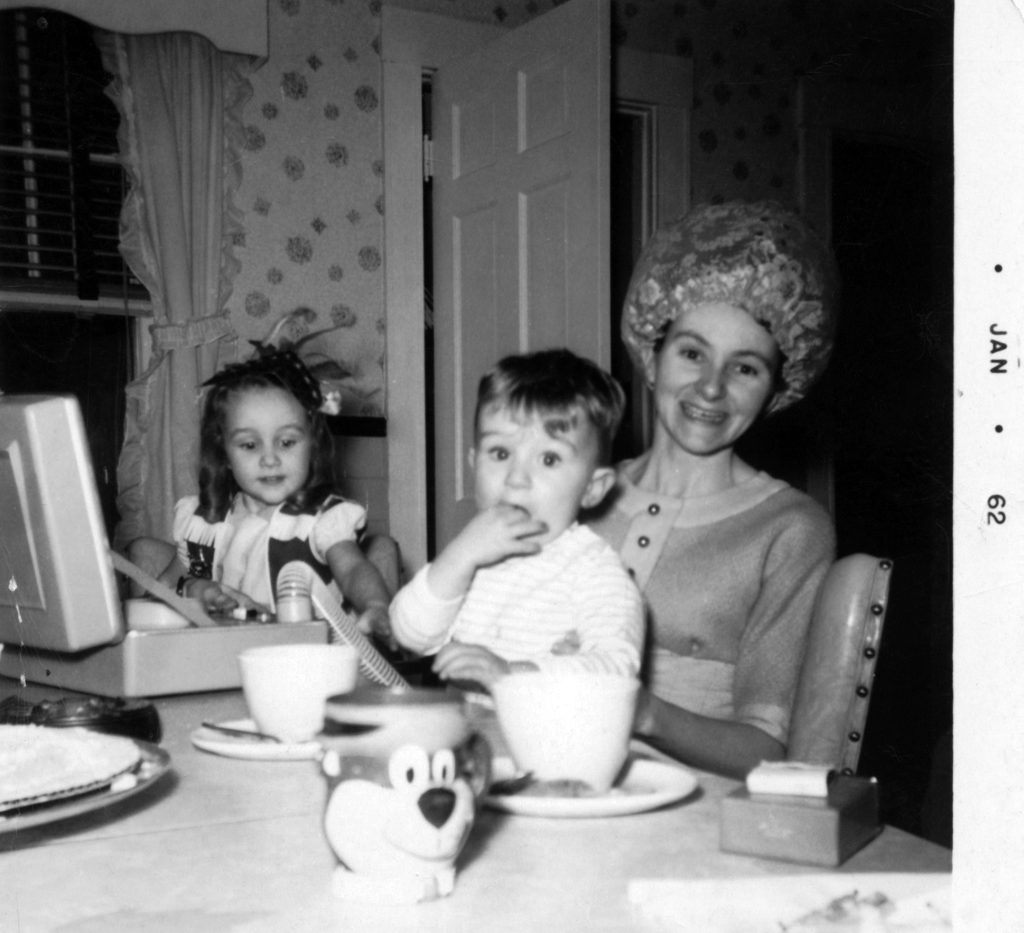
Looking at black-and-white photos and those rich Kodachrome colors of my family, I keep coming back to one thought: Those pictures were intentional.
The photo of my mother as an infant on the roof of their East Boston cold-water flat was not casual. Somebody chose that moment. Somebody posed her. Somebody framed that shot. I’d guess it was my grandfather behind the camera, probably holding a boxy Kodak Brownie with maybe six or eight shots on a roll.
That was it. Six or eight chances.
Loading film was fussy. You had to open the camera, thread the film just right, and hope you didn’t accidentally expose it. Then there was the cost. Developing and printing a roll was not cheap. In today’s money, each picture worked out to several dollars a shot.
So every click mattered.
You did not stand there, firing off 27 versions of the same scene, hoping one would turn out. You got one shot. Maybe two if someone was feeling a little reckless. So the photo had to be worth taking. It had to be chosen.
That is what strikes me when I look at old family photos. They feel curated.
I have one photo of my paternal grandparents lounging on the grass in front of somebody’s Irish cottage, probably around 1935. Another photo is of my grandmother balancing my mother on the center rail of a three-speed bike in York Beach, probably 1933.
Not eleven versions.
Not forty-seven.
One.
And somehow that one feels precious.
Is curated better? I don’t know.
But I do think it changes the relationship you have with a photograph. When you stop and say, ” This is exactly what I want to remember, that choice gives the image weight.
My mother loved taking pictures. Her little Kodak Instamatic documented a lot of our childhood. She was not exactly a master technician. She cut off heads with some frequency. But she took the pictures anyway, and she loved sharing them. With 24 shots on a roll and double- or triple-print days at CVS or Fotomat, photos got passed around to family like candy.
When my parents moved out of their longtime home and into assisted living, most of the photos came to me.
Boxes and boxes of them.
Some had those little digital dates stamped in the corner, which helped. Sort of. If it says 7-9-93 but everyone is dressed for Christmas, you learn pretty quickly that setting the date was not one of my mother’s great talents. Love you, Mom.
So I started sorting.
This one was blurry. That one had no heads. This one was apparently an artistic study of the driveway. Out of every pile, I would pull a few worth keeping. After a while, I got ruthless. We did not need three copies of the same bad photo. Some rolls did not merit saving a single one.
In the end, I have digitized 5000 photos. Yes. Five thousand. Not a typo. Some were my parents’ stash. Others were family photos in falling-apart albums. My photos cover five generations. My great-grandparents are not exactly overrepresented. I only have a dozen or so photos of them. But I’m grateful for every one.
Now, of course, I have the opposite problem. Too much.
When we travel, I can easily take hundreds or even thousands of photos. The thought of comparing eleven nearly identical pictures of the same cliff face is enough to make me want to lie down. Friends and family are still waiting to see photos from last fall’s road trip. Portugal? I have not even finished going through them.
And that gets to the heart of it.
There is something valuable about limits.
When I started taking pictures with a 35mm camera with 36 shots on a roll, I was careful. I framed the shot. I thought about the light. I thought about what was worth using one of those 36 exposures. I had no instant preview. A do-over meant I had one less shot on the roll for other pictures. I had to choose.
Limits made me think.
Limits made me decide what mattered.
Now I can take practically an infinite number of photos. I love that. It means I usually get the shot I was after. But I do wonder if having no real limit changes the process. If it makes us less intentional. If abundance somehow chips away at value.
Not because the photos matter less. They absolutely do not.
As I watch the 900-plus photos scroll by on my father’s digital frame, I still stop for the same things. Me as a baby, propped up by my doting dad. My mother is holding one grandchild in one frame, then that grandchild’s child in the next. Christmas photos with my siblings clowning for the camera. That rare moment when my mother looked incandescent with happiness.
I love those pictures.
But I also know this: Maybe what I’m really loving is the curated version. The chosen moments. The saved moments. The ones that made it past the blur, the duplicates, the almosts, and the not-quites.
Maybe that is the gift of curation. Not that it makes memories more real.
Just that it helps us see which ones we could not bear to lose.
What do you think?